


If you’re ready to dive into the world of Dungeons & Dragons (D&D) but want to do it from the comfort of your own home, then hosting D&D games online is your best bet! Whether you’re a seasoned Dungeon Master (DM) or a curious newbie, playing D&D online is a fantastic way to connect with friends or meet new adventurers. Let’s break it down step-by-step so you can get started on your epic journey with ease. To find more, check on ATM189
First things first, to host D&D games online, you’ll need a virtual tabletop (VTT). These are online platforms that simulate the experience of playing around a real table. Here’s how to choose and set up the perfect virtual tabletop for your game.
Understanding Virtual Tabletops
Virtual tabletops are digital platforms designed to replicate the experience of playing D&D in person. They provide tools for map-making, character management, and dice-rolling. Understanding the basic functionalities of VTTs will help you select the right one for your needs.
Popular VTT Options
Several virtual tabletops are available, each with its own features and advantages. Roll20, Fantasy Grounds, and Foundry VTT are among the most popular choices. Consider what features are most important to you, such as ease of use, cost, and customization options.
Roll20
Roll20 is a fan-favorite among the D&D community. It’s browser-based, which means no downloads, and it’s packed with features like dynamic lighting, fog of war, and character sheets. Best of all, it’s free to start! Many DMs appreciate its user-friendly interface and wide range of available modules.
Fantasy Grounds
If you’re looking for something a bit more robust, Fantasy Grounds might be your go-to. It offers a rich interface with lots of automation for gameplay mechanics. However, it does require a purchase to get started. Its comprehensive tools can enhance the gameplay experience, especially for complex campaigns.
Foundry VTT
Foundry is another powerful choice. It’s a one-time purchase and boasts a high level of customization. Its community is active and constantly creating new mods to enhance the game. Foundry’s flexibility allows DMs to tailor their gaming environment to fit their unique style.
Choosing Your Communication Tools
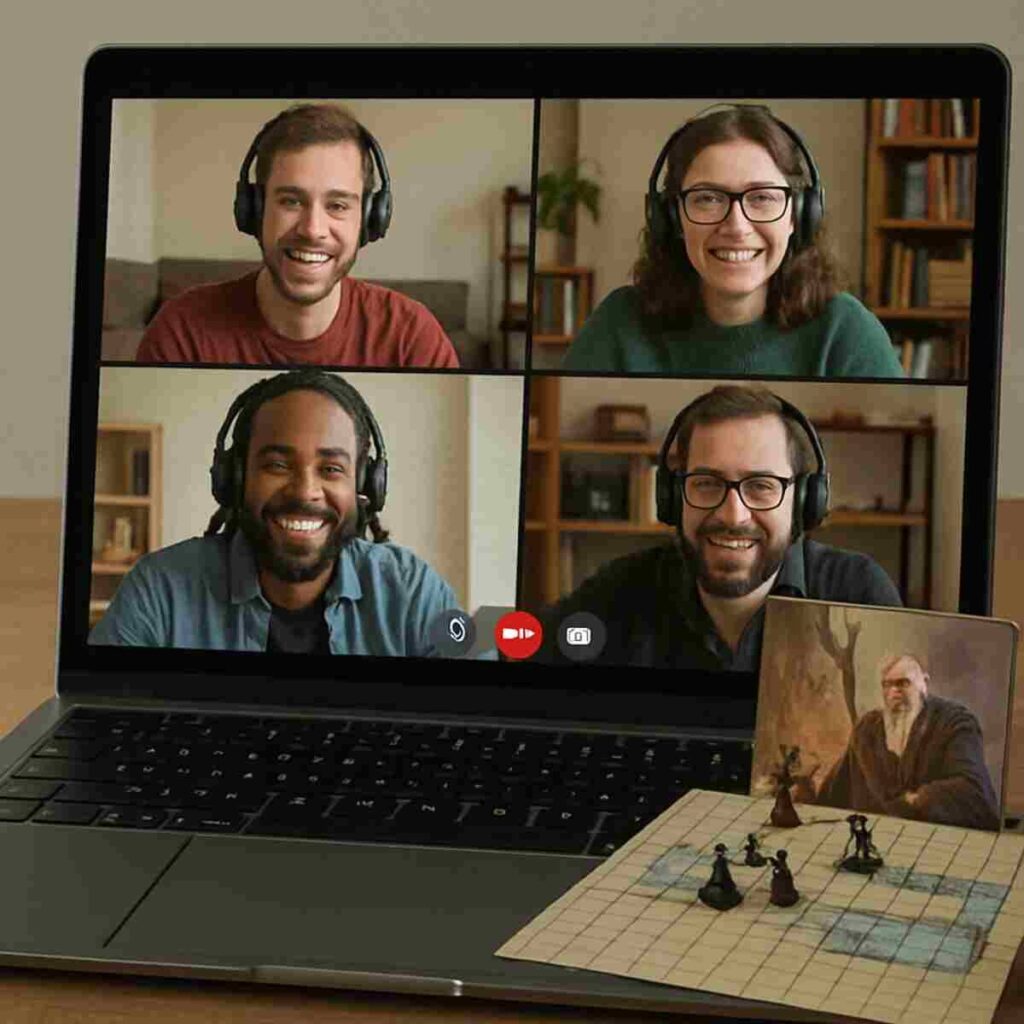
Communication is key in any D&D game. Since you’re playing online, you’ll need to decide how you and your players will talk to each other. Let’s explore the best options for maintaining clear and effective communication.
Importance of Communication Tools
Effective communication tools are essential for an immersive online D&D experience. They ensure that all players can interact seamlessly, share ideas, and stay engaged throughout the session. Choosing the right platform can enhance your gameplay by providing clear audio, video, and text communication.
Discord
Discord is a versatile platform that allows voice, video, and text communication. You can create a server specifically for your game, manage channels for different types of communication, and even integrate with some VTTs for a seamless experience. Its customization features make it a favorite among gamers.
Zoom or Skype
For straightforward video calls, Zoom or Skype are reliable choices. They offer easy-to-use interfaces and stable connections, ensuring you won’t miss any critical moments in the game. These platforms are particularly useful for DMs who prefer a simple, straightforward setup.
Additional Communication Tools
Besides Discord, Zoom, and Skype, there are other tools you might consider. Platforms like Google Meet and Microsoft Teams also offer robust communication features. Evaluate the needs of your group to determine which tool provides the best balance of functionality and ease of use.
Crafting Your Adventure
Now that your digital tools are set up, it’s time for the fun part—crafting your adventure! As a DM, you’re the storyteller and guide for your players. Here’s how to get started on creating an unforgettable journey.
Choose or Create a Campaign
If you’re new to DMing, starting with a pre-written campaign can be a great way to learn the ropes. Modules like “Lost Mine of Phandelver” or “Curse of Strahd” offer engaging stories with plenty of resources. These ready-made adventures provide structure and guidance, making them ideal for beginners.
Creating a Homebrew Campaign
For those wanting to unleash their creativity, creating a homebrew campaign allows you to tailor the story specifically for your players. Think about the setting, key characters, and the main plotline to guide your players through an unforgettable adventure. Homebrewing gives you the freedom to craft unique worlds and narratives.
Develop Your Characters and NPCs
Characters are the heart of any D&D game. Encourage your players to develop backstories for their characters. As the DM, you’ll also create non-player characters (NPCs) to enrich the world and interact with the players. Give them distinct personalities, goals, and quirks to make your world feel alive. This depth adds realism and engagement to your campaign.
Designing Quests and Challenges
Quests and challenges are the backbone of your campaign. Design them to be engaging and varied, offering both combat and role-playing opportunities. Balance the difficulty to keep players challenged but not overwhelmed. Incorporate puzzles, moral dilemmas, and unexpected twists to maintain excitement.
Running the Game
With your campaign and characters ready, it’s time to run the game. Here are some tips to ensure smooth gameplay and keep your players engaged.
Set the Scene
Start by painting a vivid picture of the world your players are in. Use descriptive language to immerse them in the setting. Remember, it’s all about making the players feel like they’re part of the story. Describe sights, sounds, and smells to bring your world to life.
Encourage Engagement
D&D is a collaborative storytelling experience. Encourage your players to interact not only with you but with each other. Foster an environment where everyone feels comfortable contributing to the story. Prompt players with questions and involve them in decision-making to enhance their investment in the narrative.
Be Flexible
While you might have a plan, D&D is unpredictable. Be ready to adapt to your players’ decisions and let their choices shape the narrative. This flexibility is what makes each session unique and exciting. Embrace unexpected moments and use them as opportunities to enrich your story.
Managing Time and Pace
Online games can sometimes lag, so managing time effectively is crucial. Set clear expectations for session length and break times. Keep the action moving and check in with players to maintain engagement. Use timers for turns and encourage concise role-playing to keep the game flowing smoothly.
Utilizing Online Resources
Take advantage of the plethora of online resources available to enhance your game. These tools and communities can provide inspiration, advice, and support throughout your D&D journey.
D&D Beyond
D&D Beyond is a digital toolset that offers access to official content, character builders, and campaign management tools. It’s a handy resource for both DMs and players. Its comprehensive database and user-friendly interface make it an invaluable asset for managing your game.
Reddit and Forums
Join communities like the D&D subreddit or other forums to exchange tips, ask questions, and share your experiences. The D&D community is welcoming and always ready to help newcomers. Engaging with these communities can provide fresh ideas and solutions to common challenges.
Online Tutorials and Videos
Explore online tutorials and videos to expand your DM skills. Platforms like YouTube offer a wealth of content from experienced DMs covering everything from storytelling techniques to tactical combat advice. Learning from others can inspire new approaches and enhance your gameplay.
Custom Maps and Art Assets
Enhance your game with custom maps and art assets. Many websites offer free or purchasable resources to enrich your visual storytelling. High-quality maps and tokens can add depth and realism to your campaign, making your world more immersive for players.
Tips for a Successful Online Game
To wrap it all up, here are a few additional tips to ensure your online D&D games run smoothly:
- Test Your Tech: Before your first session, do a test run to ensure everything is working correctly. Check your internet connection, audio settings, and VTT functionality to avoid technical issues during gameplay.
- Establish Ground Rules: Set expectations for behavior and communication to keep the game enjoyable for everyone. Discuss topics like turn-taking, out-of-character discussions, and respect for others’ ideas to foster a positive gaming environment.
- Keep the Pace: Online games can sometimes lag. Keep the action moving and check in with players to keep them engaged. Use visual aids and prompts to maintain interest and energy throughout the session.
- Have Fun: Remember, the ultimate goal is to have fun! Don’t stress too much about perfection. Embrace the unpredictability of the game and enjoy the shared storytelling experience with your players.
With these steps, you’re well on your way to hosting an epic D&D game online. So gather your party, roll the dice, and let the adventure begin! Happy adventuring, and may your rolls be ever in your favor!